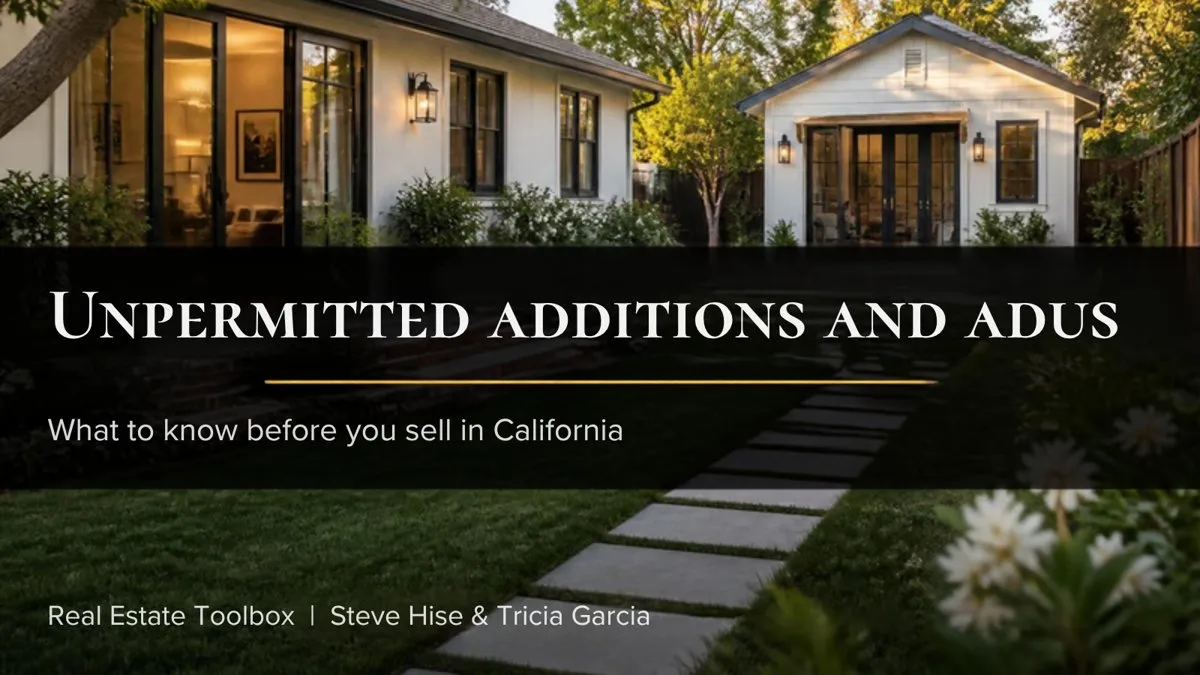
Selling a Home With Unpermitted Work or an ADU in California
Can you sell a Simi Valley house with an unpermitted addition, garage conversion or ADU? Yes. Homes with unpermitted work sell in California all the time. What you can't do is stay quiet about it: the state's Transfer Disclosure Statement asks directly about room additions and other work done without necessary permits. Once it's disclosed, you have three paths: permit it, remove it, or sell it as-is and price it with the buyer's appraisal and loan in mind.
We're Steve Hise and Tricia Garcia, and we help homeowners across Simi Valley and the nearby cities sell. Here's how each path works, what an appraiser does with unpermitted space, and the state law that makes many older ADUs easier to legalize.
1. What the disclosure form actually asks
Most sellers of a one-to-four unit home in California fill out the Real Estate Transfer Disclosure Statement (TDS), set out in Civil Code Section 1102.6. In the section on conditions you're aware of, the form asks yes-or-no questions that include:
- Room additions, structural modifications, or other alterations or repairs made without necessary permits.
- Room additions, structural modifications, or other alterations or repairs not in compliance with building codes.
Those are two separate questions. A permit that was never finaled, a garage converted years ago, or a back unit a prior owner built all belong in that conversation. If you know about it, disclose it in plain words. Our California seller disclosures guide walks through the rest of the packet.
2. First, find out what was permitted
Don't guess. Sometimes work you assumed was unpermitted was signed off years ago, and sometimes a "finished" room never got a final inspection. Before you list:
- Call the city. Inside Simi Valley city limits, the Building and Safety Division front counter is (805) 583-6723, at 2929 Tapo Canyon Road. Ask what permit records and plans it has for your address. The city says it keeps plans for most residential projects for at least three months after completion, so long-term plan sets for an older home may not be on file.
- Check your own files: permit cards, final sign-offs, contractor invoices, and the disclosures from when you bought.
- Elsewhere, call the building department that covers the address: the county outside city limits, or the city in Moorpark, Thousand Oaks, Camarillo or Los Angeles.
The gap between the records and the house is what you'll disclose and price.
3. How an appraiser treats unpermitted space
Most buyers use a loan, and the lender's appraisal sets how much the loan can support. Fannie Mae's Selling Guide, which many conventional loans follow, says this about additions without permits: if the appraiser identifies an addition that doesn't have the required permit, the appraiser must comment on the quality and appearance of the work and its impact, if any, on market value.
There's no rule that unpermitted square footage counts for zero, and none that it counts in full, so the quality of the work and good comparable sales matter. Our post on pricing a Simi Valley home explains how comparable sales are chosen.
For ADUs, Fannie Mae's guide reports the ADU's living area on its own line, not in the main home's square footage, and the appraisal must analyze its effect on value or marketability. If an ADU isn't allowed under zoning at all, extra conditions apply, including comparable sales with the same non-compliant use. Other loan programs set their own rules.
4. Path one: permit it
Legalizing work usually means applying for a permit for what's already built, then passing inspection. The building department may need walls or ceilings opened so inspectors can see framing, wiring or plumbing, and parts may need to be brought up to current code. Ask the city what it will need before you open anything.
Older unpermitted ADUs get help from state law. Under Government Code Section 66311.7, as described in the state housing department's (HCD) March 2026 ADU Handbook, a city or county can't deny a permit for an unpermitted ADU built before January 1, 2020, just because it violates building standards or doesn't meet state ADU law or a local ordinance. Two exceptions apply: when the agency finds that correcting the violation is necessary to protect the health and safety of the public or occupants, and when the building is deemed substandard under Health and Safety Code Section 17920.3.
The same section tells local agencies to post a checklist of the conditions that make a building substandard, and to tell homeowners they may get a confidential third-party code inspection from a licensed contractor before applying for a permit. That private inspection is a smart first step: it tells you what the unit needs before the city is involved. For Simi Valley's own ADU size, setback and parking rules, see our guide to ADU rules in Simi Valley.
This protection covers ADUs. A converted garage that isn't set up as an ADU, or an unpermitted room addition, goes through the city's normal permit process.
5. Path two: remove it
Sometimes the simplest fix is undoing the work, such as turning a converted garage back into a garage. It can make sense when the work is small, poorly built, or would cost more to legalize than it adds. Removal may need its own permit, so ask the building department first.
6. Path three: sell as-is with full disclosure
Many homes sell with unpermitted work disclosed. You describe what you know, price the home with the appraisal in mind, and let buyers decide. Cash buyers and investors are often more flexible; buyers using a loan depend on what the appraiser and lender accept. Clear, early disclosure keeps surprises out of escrow. If you're weighing this path, read Selling a House As-Is in Simi Valley.
7. What legalizing does to property taxes
The State Board of Equalization says an addition to an existing home, including increasing a residence's square footage, is new construction for property tax purposes. Only the newly built portion is reassessed; the assessed value of the rest of the property isn't reappraised because of the addition. The BOE also lists building permits as one of the ways assessors find new construction, so a new permit can lead to a reassessment of the new portion. See our guide to Simi Valley property taxes, and ask the Ventura County Assessor how your project would be handled.
8. How to choose
- How big is the work, and what does a private code inspection say it needs?
- What would permitting cost, and how long would it take?
- How would buyers and appraisers value the space legal versus not?
If you're selling to buy your next home, timing matters even more. We plan both moves together so you're not stuck in between. And if you're curious where your home stands today, start with What's My Simi Valley Home Worth?
Frequently Asked Questions
Do I have to disclose unpermitted work when I sell in California?
If you know about it, yes. The Transfer Disclosure Statement asks about room additions, structural modifications and other alterations made without necessary permits, and separately about work not in compliance with building codes.
Will unpermitted square footage count in the appraisal?
It depends. Under Fannie Mae's guide, the appraiser must comment on the quality and appearance of an unpermitted addition and its impact, if any, on market value. There's no automatic rule either way.
Can I legalize an unpermitted ADU built before 2020?
Often. Government Code Section 66311.7 bars a local agency from denying a permit for an unpermitted ADU built before January 1, 2020, just because it violates building standards or ADU rules, unless a correction is needed to protect health and safety or the building is substandard.
Will permitting an addition raise my property taxes?
It can. The BOE treats additions as new construction, so the new portion is assessed, while the rest of the property keeps its existing assessed value.
Where do I get the permit history for a Simi Valley home?
Inside city limits, call the City of Simi Valley Building and Safety Division at (805) 583-6723. Outside city limits, ask the county.
Not sure what was permitted on your home?
We'll help you pull the records, compare them to the house, and decide whether to permit, remove or sell as-is. Schedule a call, or call or text 805-424-6226.
Related Articles
- ADUs in Simi Valley: City Rules, Value and Selling a Home
- California Seller Disclosures, Explained in Plain English
- Selling a 1960s Simi Valley Ranch: What Buyers Check First
- How Much Does It Cost to Sell a House in Simi Valley?
Sources
All checked November 17, 2026.
- California DRE: Disclosures in Real Property Transactions (RE 6), including the Transfer Disclosure Statement under Civil Code Section 1102.6 (PDF)
- California HCD: Accessory Dwelling Unit Handbook, March 2026 (Government Code Section 66311.7) (PDF)
- Fannie Mae Selling Guide B4-1.3-05: Improvements Section of the Appraisal Report
- State Board of Equalization: New Construction
- City of Simi Valley: Building and Safety Division and Duplication of Plans and Other Documents
Steve Hise and Tricia Garcia, Real Estate Toolbox at eXp Realty, 1720 E Los Angeles Ave, Suite F, Simi Valley, CA 93065
Steve Hise CA DRE #01702055 | Tricia Garcia CA DRE #02032007
This article is general information, not legal, tax or financial advice. Permit rules vary by city and county and change over time; check with your local building department, a licensed contractor and your own advisors before you decide.


